Research
Abstract: Establishing a Physiologically Variable Model of Ischemic Stroke to Recapitulate Patient Heterogeneity
Stony Brook University
2025 - 2025
This work examines ischemic stroke heterogeneity using two transient middle cerebral artery occlusion (tMCAO) models (Longa vs. Koizumi) across variable ischemic durations (30/60/90 min). Using behavioral testing and laser speckle contrast imaging (LSCI), the study compares functional outcomes, cerebral blood flow patterns, and early immune-cell dynamics (neutrophils and microglia/macrophages) to better mirror patient-to-patient variability in large vessel occlusion stroke.
Role: Co-author, contributed to behavioral video review and data processing to quantify laterality index used in outcome comparisons across models/ischemia durations.
Authors: Laurel E. Schappell; Miguel M. Madeira; Eleftherios A. Zoumpanidopoulos; Jeremiah Varghese; Claire Polizu; James DiPersio; Meiyi Tang; Stella E. Tsirka; Neil A. Nadkarni
Manuscript (in revision): Ischemic Duration Outweighs Reperfusion Efficacy in Driving Early Neuroinflammation and Motor Deficits after Transient MCAO
Stony Brook University
2025 - Today
This study models clinically realistic variability in ischemic stroke by systematically altering ischemic duration and reperfusion success in transient MCAO (tMCAO) myeloid-reporter mice. Using longitudinal perfusion imaging and behavioral testing, the work shows that infarct pathology, locomotor deficits, and innate immune responses are driven more strongly by ischemic duration than reperfusion efficacy, with myeloid-cell morphology/spatial patterning most affected.
Authors: Schappell LE, Madeira MM, Polizu C, Zoumpanidopoulos EA, Tang M, Tsirka SE, Nadkarni NA
Abstract: Manipulation of Large Vessel Occlusion Models Demonstrates Pathophysiological Heterogeneity
Stony Brook University
2024 - 2024
The research investigates the heterogeneity of ischemic stroke using two preclinical models: the Longa and Koizumi models. These models simulate varying degrees of stroke severity and reperfusion, as well as highlight the differences in cerebral blood flow, neutrophil infiltration, and functional deficits between these models, offering insights into patient heterogeneity in stroke progression and treatment efficacy.
Role: Co-author, contributed to data analysis by sorting behavioral videos to establish a laterality index.
Authors: Laurel E. Schappell, Eleftherios A. Zoumpanidopoulos, Claire Polizu, Meiyi Tang PhD, James Dipersio, Stella E. Tsirka PhD, Neil A. Nadkarni MD
Genotyping on Mice Colonies
Stony Brook University
2023 - Today
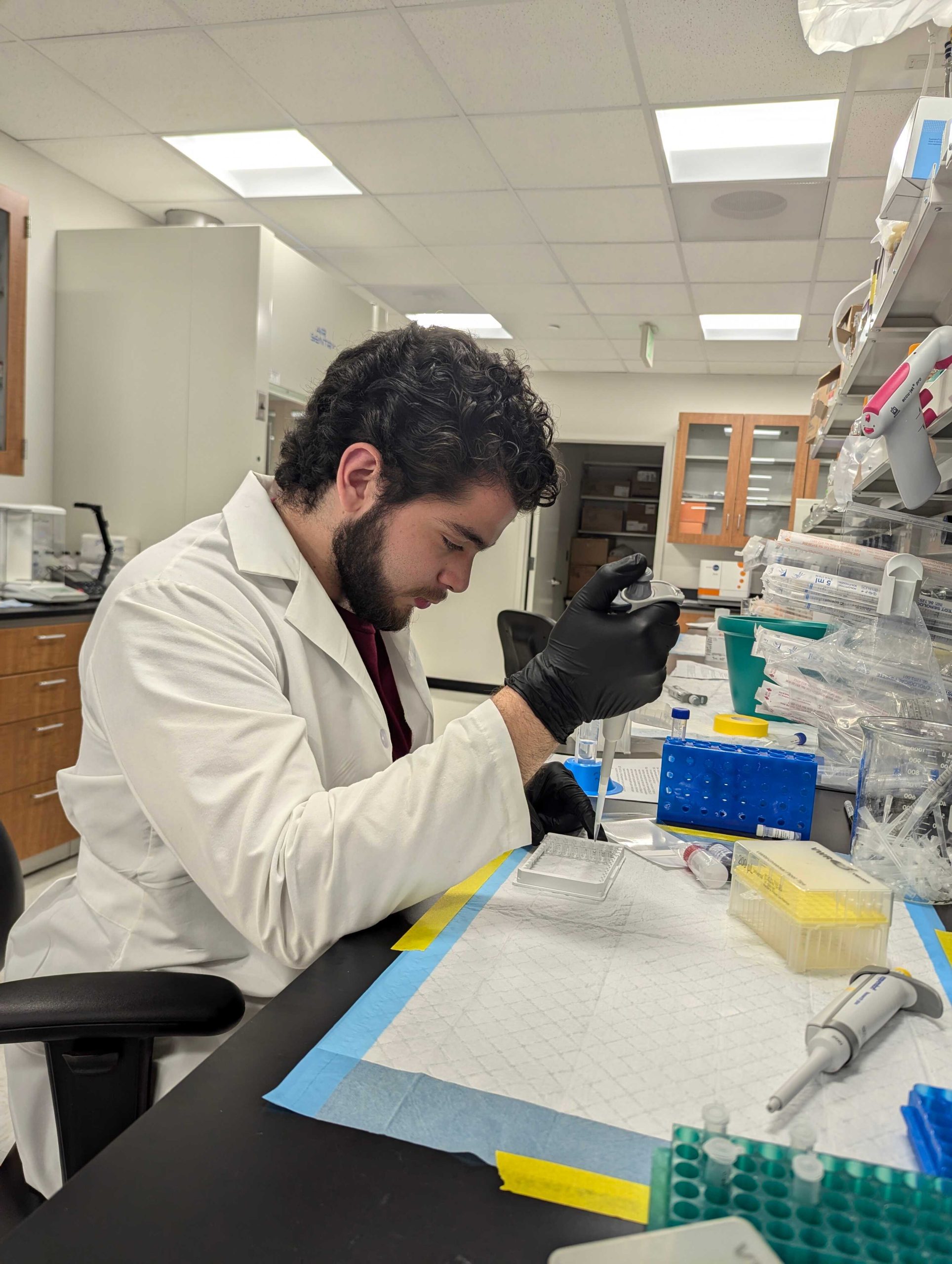
Performed genotyping to identify and properly categorize our mice colonies. This process is essential for ensuring the accurate selection of genetically modified mice for our experiments, which is crucial in for their use in our research due to the different reporter gene of each mice colony as well as to ensure that the mice tested are genetically similar. The process involves standard PCR assays designed to detect the presence of this fluorescent protein.